
Exit Planning for Farmers Branch Business Owners
We help owners of privately held companies learn what their business is worth and what each path out really involves. Exit planning, business valuation, readiness assessments, value enhancement and continuity planning, all explained in plain English, at our office or by phone and video with owners in Farmers Branch, Carrollton and Addison.
- Free first conversation
- No obligation to sell
- Confidential from day one
- Office, phone or video
What We Help Owners With
Behind most first calls sits a simple question: what is the company worth, and what could I do next? We answer that first, then help you weigh what the answer means for you. Our work covers exit planning, business valuation, an exit readiness assessment, value enhancement planning, and contingency and continuity planning. Take one piece and stop there, or build a full plan over several years.

Exit Planning
A written plan for leaving your company on your terms, with every exit route compared side by side and explained without jargon.

Business Valuation
Learn what your company is worth today, which numbers drive that figure, and what a buyer would question first, all set out in plain language.

Exit Readiness Assessment
A close, confidential look at how ready your company is for a sale or handoff, with a plain list of what is strong and what needs work first.

Value Enhancement Planning
Find the specific risks that pull your company's value down, then work through them one at a time so buyers see a stronger business.

Contingency & Continuity Planning
A written plan for who leads, who signs and how value is protected if an owner dies, becomes disabled or leaves without warning.
Why Owners Choose to Work With Us
Selling or handing off a company is usually a once-in-a-lifetime decision. We slow it down, walk through each step with you, and leave the choice in your hands.
Every term defined before it matters
EBITDA, add-backs, earnouts, seller notes, working capital targets. Each one gets a plain definition and an example drawn from your own statements. If you could not explain a deal term to your spouse or your banker, we have not finished explaining it.
Your options compared on one page
Selling to an outsider, handing the company to a son or daughter, a buyout by your managers, an employee ownership plan, or carrying on as you are. For each path we show the effect on your income, your tax bill, your staff and your calendar, measured the same way so the comparison is fair.
No pressure toward a sale
No pressure, and no obligation to sell. Many owners get a value, think it over, and choose to keep running the company for years. We count that as a good result.
Kept private from the start
Your employees, customers and competitors don't need to hear about a possible transition until you decide they should. Calls, financial files and valuation work stay with us, and we help you plan who learns what, and when.
Work with a senior advisor
The first call is with our co-founder, not a salesperson. The person who listens to your goals is the one who builds the plan around them.
What Moves Our Fee
Companies reach us in very different shape, so our fee is set case by case. It reflects how much work it takes to build a clear picture and a plan you can actually use. These are the biggest drivers.
After the first conversation we lay out which pieces fit your situation and give you a written scope and fee before any paid work begins. Nothing is billed until you have agreed to it.
- Size and complexity of the company
- A single-location firm with one revenue stream takes less analysis than a company with several divisions, multiple entities or real estate held separately.
- State of your financial records
- Clean, reviewed statements shorten the work. If personal and business expenses are mixed, or the books run on cash basis only, we spend more time normalizing the numbers before a valuation means anything.
- Number of owners
- Partners often want different things. Aligning two or three owners on timing, price and roles takes more conversation than planning for one.
- Which services you need
- A stand-alone business valuation is a smaller engagement than a full exit plan with value enhancement work and a continuity plan behind it.
- Your timeline
- An owner planning three to five years out can spread the work. A compressed timeline, such as an unsolicited offer already on the table, means more work in a shorter window.
How Working With Us Runs
The process is deliberate and unhurried. You will always know what comes next and why.
- 1
A 20-minute conversation
You talk with our co-founder about your company, your goals and what is on your mind. There is no charge and no obligation. Many owners simply want to know whether planning makes sense yet.
- 2
A first look at value
We can prepare a free business valuation from your financials so you have a realistic starting number. We show how we reached it and which factors pushed it up or down.
- 3
A readiness review and written plan
We assess how ready the company and you personally are for a transition, then set out options, gaps and priorities in plain language. You see the trade-offs before you choose a direction.
- 4
Steady work toward your exit
We meet on a regular schedule to strengthen value, reduce the company's dependence on you, and keep the plan current. When you are ready to act, we coordinate with your attorney, CPA and any broker or buyer.

Serving Owners Across the North Dallas Area
We advise owners whose companies are based in Farmers Branch and nearby Carrollton, Addison, Irving, Coppell, Richardson and Plano. Clients in University Park, Highland Park, Lewisville and Euless work with us as well. Meetings can take place at our office or over phone and video, so a long drive is never part of the bargain.
- Farmers Branch
- Carrollton
- Addison
- Irving
- Coppell
- University Park
- Highland Park
- Plano
- Lewisville
- Richardson
- Euless
If your company sits elsewhere in Texas, call anyway. We will tell you plainly whether we are the right fit.

A Small Advisory Firm Built Around Clear Answers
Plenty of owners spend decades building a company and then step away without ever learning its value or the full range of ways out. That gap is the reason this firm exists. Some owners accept the first offer that arrives and later find it was low. Others put the question off until a health scare or a change at home forces a hurried decision. A modest amount of preparation prevents both.
Our work is quiet and careful. We read your statements line by line, ask about the parts of the business that never show up on paper, and write recommendations you can act on. We meet in person at our office or over phone and video, depending on what fits your week.
You can learn more about how we approach each engagement on our About page, or read the details of any service before you pick up the phone.
Questions Owners Ask Us
- When should I start planning my exit?
- Ideally three to five years before you want to step away. That window leaves room to raise value, clean up your records and make the company less dependent on you day to day. A shorter runway still pays off, since a plan built in six months beats walking into a sale with none at all.
- How do I know what my business is worth?
- A sound valuation starts with your earnings, adjusted for owner perks and one-time costs, then applies multiples that reflect your industry, size, growth and risk. We prepare a free business valuation so you have a realistic starting figure. We then go through each assumption with you so the number makes sense.
- Does working with you mean I have to sell?
- No. There is no pressure, and no obligation to sell. Some owners use what they learn to build a stronger company, some plan a handoff to family, and some simply want to know where they stand. Any of those is a good reason to talk with us.
- What is the difference between exit planning and selling through a broker?
- A broker markets the company and works to close a sale. Exit planning comes earlier and covers more ground: which exit suits you, how to raise value beforehand, what it means for your taxes and family, and what happens if something goes wrong along the way. When a sale is the right move, we work alongside your broker.
- What if something happens to me before I am ready to leave?
- That is what contingency and continuity planning is for. We help you write down who steps in, how decisions get made and how ownership is handled if you suddenly cannot work. It protects your family, your employees and the value you have built.
- Will my employees find out I am planning an exit?
- Only if you choose to tell them. Our work is confidential, and if key people need to be brought in, we help you pick the timing and the words.
- Is there any guarantee on your fee?
- Yes. If we do not find at least twice our fee in value, you don't pay. Before the engagement starts, we agree with you on how that value will be measured.
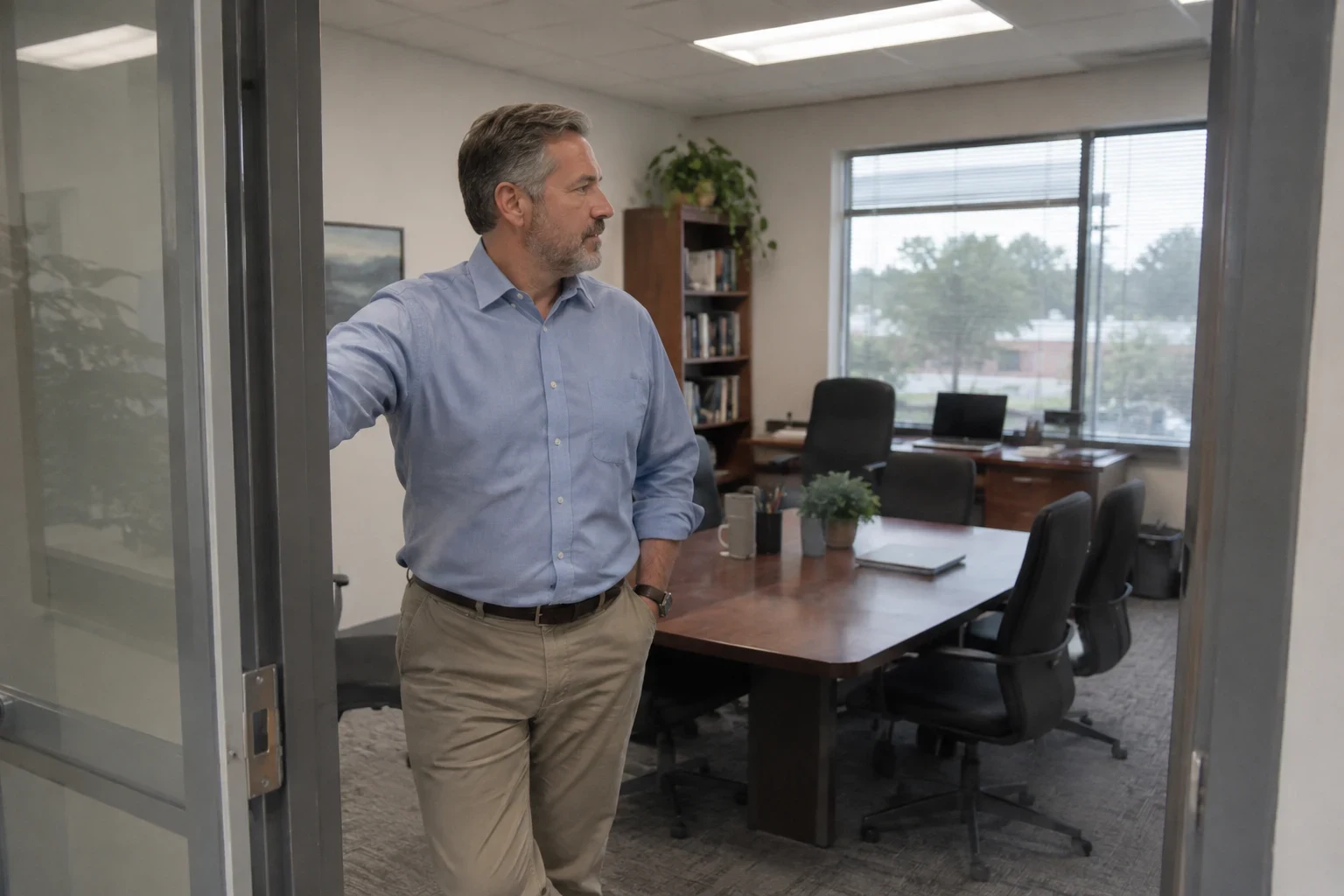
Start With a Clear Picture of Your Company
Twenty minutes with our co-founder is enough to see where you stand and which next step, if any, makes sense. The call is free and carries no obligation.